

Sexual Orientations - Part 1
Installment #18 - Sexual Orientations - We All Have Them

Read my previous installment here: Compersion - Sympathetic Joy
(6 minute read)
SEXUAL ORIENTATION is understood to be driven primarily by biology. Many sex characteristics are determined in the womb. Hormones are believed to play a role as well. Exposure to certain hormones during development may influence sexual behavior. When an individual’s sexual orientation emerges it could be androphilic (finding male bodies erotic), gynephilic (finding female bodies erotic), bisexual, asexual, or something else. Many people’s orientation can be seen on a continuum, with substantial variation even among self-identified heterosexuals or homosexuals.
THE KINSEY REPORTS, Sexual Behavior in the Human Male (1948) one of Kinsey’s two best-selling books was immediately controversial, both within the scientific community and the general public, because conventional beliefs about sexuality were challenged, subjects were discussed that had previously been taboo.
THE KINSEY SCALE is used to measure a person’s overall balance of heterosexuality and homosexuality, and takes into account both sexual experience and psychosexual reactions. The scale ranges from 0 to 6, with 0 being exclusively heterosexual, and 6 exclusively homosexual.
More recent studies have produced more varied outcomes, partially due to improved study methods, and also to evolution of terminology. For instance, the Kinsey Scale makes no differentiation between people’s expressions of sexual interest, desire, or in seeking, sexual experiences. Likewise, recent studies have recognized the diversity of types of attractions that exist relating to engaging in sexual behaviors.
SEXUAL ORIENTATION is an aspect of self that involves:
How you identify yourself
The way you experience sexual and/or romantic desire
The genders or sexes of the people you’re attracted to
The genders or sexes of the people you engage in sexual or romantic activity with
ROMANTIC ORIENTATION is someone’s pattern of romantic attraction based on any number of factors, regardless of their sexual orientation. For example, someone may be sexually attracted to multiple genders but only be romantically involved with men (or women.)
HERE IS MY OVERVIEW
HETEROSEXUAL (Straight) is exclusively man-woman attraction - socially, romantically, and sexually. A Kinsey 0.
Then there are the rest of us, which can be generally defined as Queer - an umbrella term that describes people who aren’t exclusively heterosexual; and acknowledges that sexuality is a spectrum as opposed to a collection of independent and mutually exclusive categories.Included in Queer is of course Homosexual (Gay and Lesbian) - exclusively same sex attraction - socially, romantically, and sexually. A genuine Kinsey 6.
Perhaps, you’re not exclusively heterosexual - and that’s ok.
GAY. I think I can speak to that, since I have identified as a cis-gay-man for many years. Referring to men who are attracted to men (leaving “lesbian” to refer to women attracted to women), there is great variation between gay men. Some proudly claim to be “gold star” gays, having never had sex with a woman - apparently a self-perceived claim to the pinnacle of gay purity. Obviously Kinsey-6ers.”
ALTERNATIVELY, For those of us that experience any sexual attraction to others, we can also consider ourselves Allosexual. Those who lack any romantic or sexual attraction to others could wear the labels Aromantic, and Asexual, respectively.
On the other hand, Cupiosexual describes someone who doesn’t overtly experience sexual attraction, but still has the desire to engage in sexual behavior or a sexual relationship. Never lacking for a partner, Solosexuals prefer masturbation over sex with any other partner.
In his book, The Happy Hypersexual, Jason Armstrong not only self-identifies as hypersexual, solosexual, and pornosexual, but also Autosexual. He describes autosexual as “someone who is sexually stimulated by their own image. They are their own sex object.
Androsexuals experience attraction to masculinity, regardless of the individual’s gender or sexual orientation, while a Gynosexual is someone who experiences sexual or romantic attraction to women, females, or femininity. Others just want to mix it all up, with Allotroposexuals (Skoliosexuals) - being attracted to those with non-cisgender gender identities, such as people who are nonbinary, genderqueer, or trans.
A Ceterosexual person is attracted specifically to transgender or nonbinary individuals. Omnisexual, Polysexual, and Pansexual people are attracted to “any,” “many,” or “all” other genders, respectively; while Biromantic people experience romantic attraction, but not sexual attraction, to people of more than one gender.
Demisexuals only experience sexual attraction to someone once they have a romantic or platonic relationship with them. Demiromantic describes people who experience romantic attraction only under specific circumstances, such as after building an emotional relationship with a person. Sapiosexuals are the smart ones, who experience attraction based on intelligence, rather than sex or gender.
I have to admit, I think my new favorite is the Pomosexual, who rejects sexuality labels or doesn’t identify with any of them.
I have left Bisexuality+ for last - sexual attraction to more than one gender, and is inclusive of all genders, with potential attraction from across the gender spectrum. We’ll cover Bisexuality in the next installment!
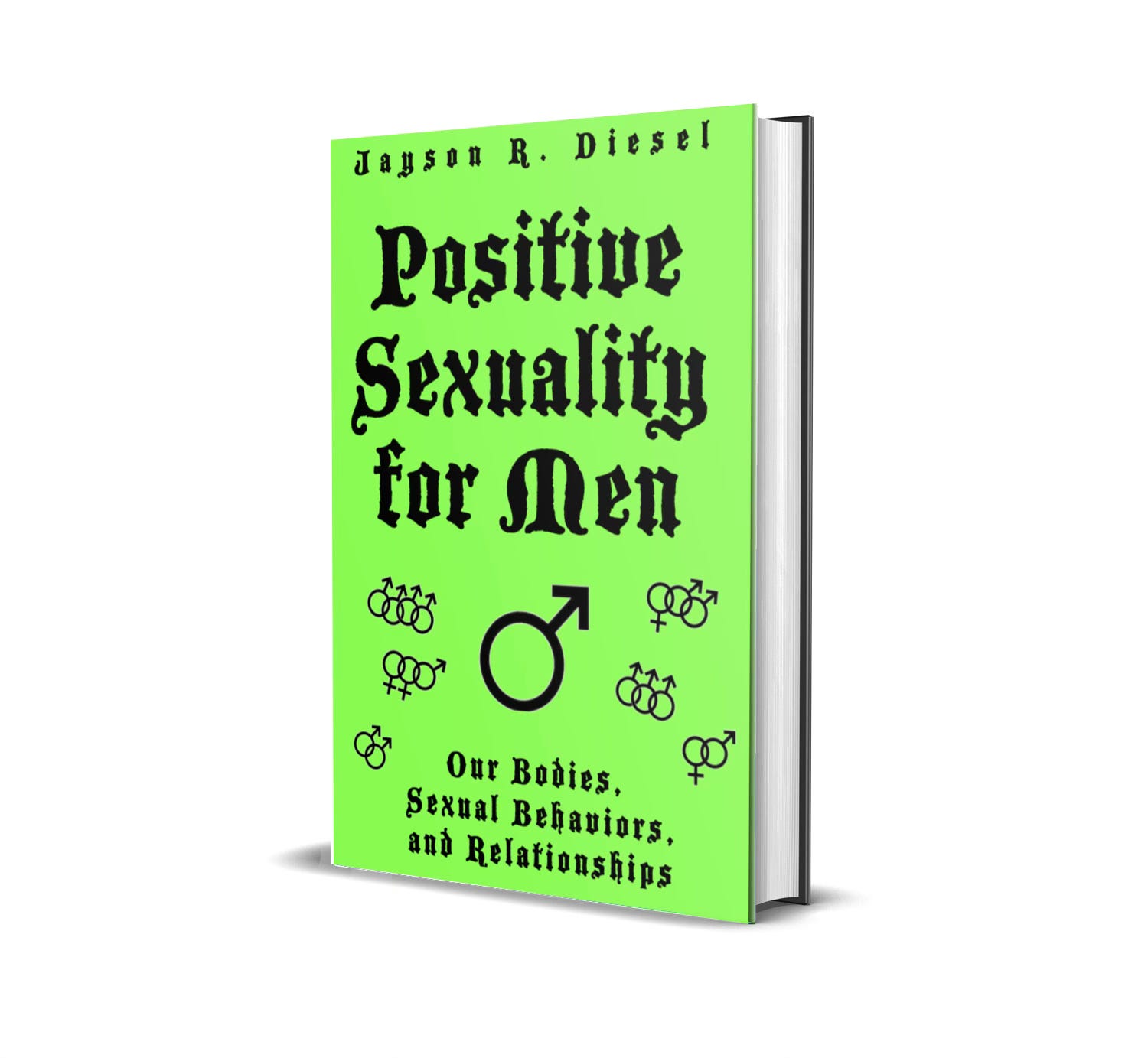
Excerpt From POSITIVE SEXUALITY FOR MEN, by Jayson R. Diesel. This material may be protected by copyright.
“By getting to know Jayson through his experiences and insights, you’ll get to know yourself better as well. Through Jayson’s honesty and vulnerability, you’ll discover that exploring and ultimately “owning” your own sexuality, in the myriad ways this book lays them out (and in the myriad ways you yourself are uniquely sexual), isn’t as difficult or as scary as our often-uptight society wants you to think it is.” - Wynward H. Oliver, author of Homo-Work and The Gooner’s Handbook
Thank you reading these excerpts. The full journey, and all the personal stories are in the book. Many readers have also said the personal stories are the best parts. Order your copy of Positive Sexuality for Men.
Read my next installment here: Sexual Orientations - Part 2