

Compersion - Sympathetic Joy
Installment #17 - Not for the Faint of Heart. Read at Your Own Risk!

Read my previous installment here: Sexual Behaviors
(6 minute read)
Today may be the first time you have heard this work: Compersion. And, it may be the first time you have heard its essence. Its etymology is as follows: It was coined in the early 1990s by a group of members of the Kerista Commune, a polyamorous group based in San Francisco, California, in existence between 1956 and 1991. It was apparently randomly created using an alphabet board, with the suffix “-ion”denoting it as a noun.
COMPERSION is described as a feeling of joy experienced by someone when their partner experiences happiness, especially in another sexual or romantic situation.”
It is related to “sympathetic joy,” which is our wholehearted participation in the happiness of others. It includes the positive thoughts, emotions, and sensations derived from knowing of another person’s gratifying experience, even when this experience does not involve or benefit us directly.
This doesn’t seem radical when we feel happy for a partner, friend, or family member getting a new job, reaching a fitness goal, or graduating from college. But what if our romantic partner were to experience pleasure or contentment from an intimate encounter with someone else?
Compersion is joy felt when a partner enjoys an intimate or sexual connection with another person, which can foster a sense of love and support. Think “empathy.” Try to see the situation from your partner’s perspective to promote empathy and your mutually beneficial relationship.
This involves an ideological commitment to honoring your partner’s sexual and romantic autonomy - a value that is the opposite of the belief that jealousy entitles us control over our partner’s intimacy.
This expectation of control over our partner is a central feature of compulsory monogamy - the cultural norm that frames monogamy, or at least serial monogamy, as the superior, and only respectable way to form and maintain intimate relationships.
The most important factors that promote compersion include trust, communication, and security within the relationship. The more connected the relationship, the more partners are capable and likely to experience compersion for each other.
Learning compersion can benefit people in all types of relationships. Whether one is in a monogamous, or ethical non-monogamous relationship, compersion conveys to the other person that they are genuinely supported on their chosen path to well-being and self-expression.
“JEALOUSY is something that gets talked about a lot, but in a nutshell, the emotion we call jealousy is actually a combination of envy and insecurity. So how is it possible to feel good about the fact our partners are experiencing intimate connections with someone else if it makes us feel insecure?
Surely, it can’t be possible to feel happy for your partner while they are making us miserable? I’m no psychologist. I’ve never claimed to be. My writing comes from research and my personal experiences. It comes down to the fact that, in a healthy relationship, you and your partner don’t suddenly become a single entity. You may be a “couple,” but you also remain individuals.
And, as individuals, so your internal and external feelings also remain separate. Compersion is an external feeling. You are seeing your partner happy outside of their connection to you. And even though it has nothing to do with you, seeing this happiness makes you feel good. ”
It’s simply a part of the journey. You don’t need to wait until you’ve defeated jealousy before you can start enjoying compersion in ethical non-monogamy.
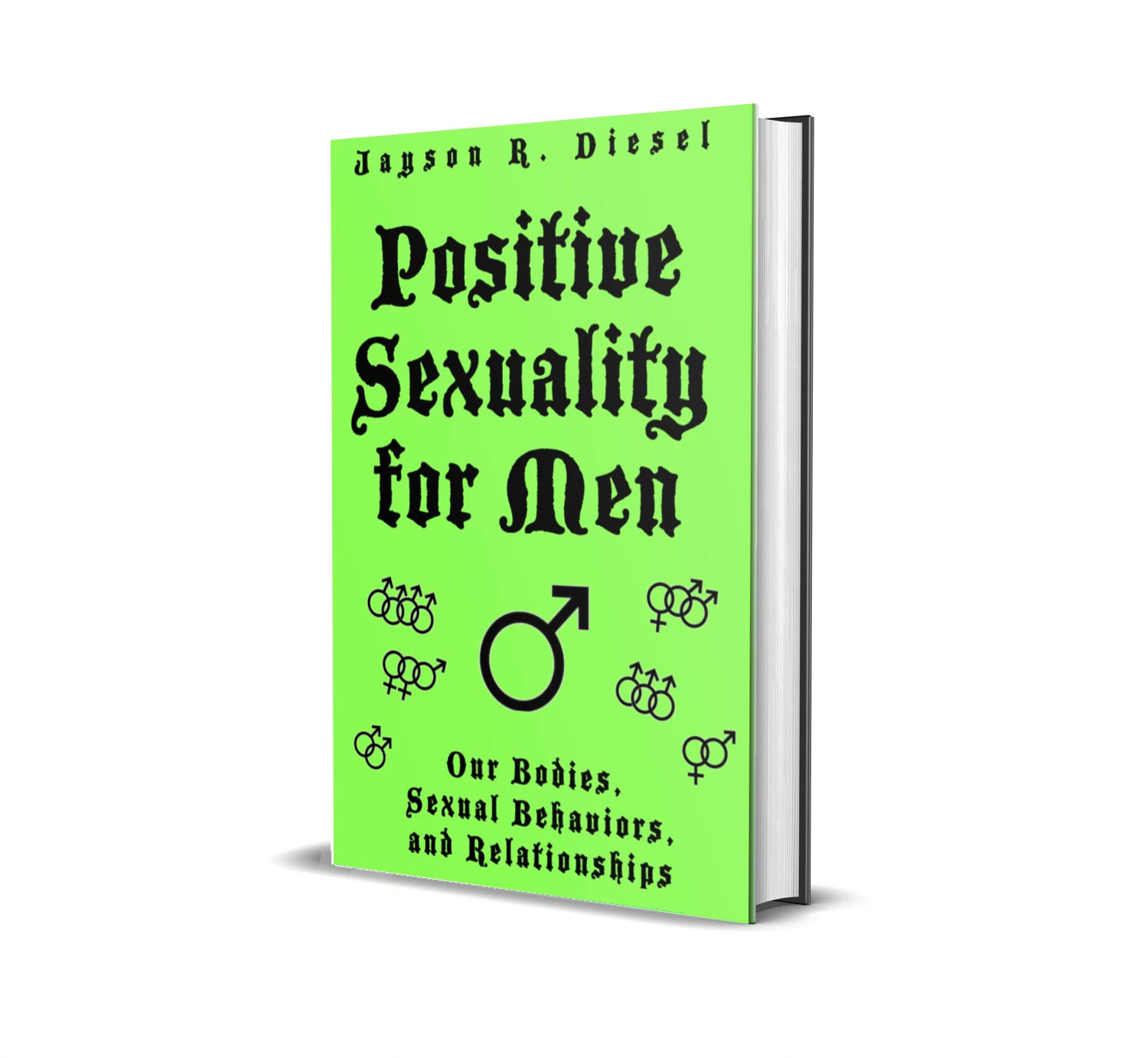
Excerpt From POSITIVE SEXUALITY FOR MEN, by Jayson R. Diesel This material may be protected by copyright.
“By getting to know Jayson through his experiences and insights, you’ll get to know yourself better as well. Through Jayson’s honesty and vulnerability, you’ll discover that exploring and ultimately “owning” your own sexuality, in the myriad ways this book lays them out (and in the myriad ways you yourself are uniquely sexual), isn’t as difficult or as scary as our often-uptight society wants you to think it is.” - Wynward H. Oliver, author of Homo-Work and The Gooner’s Handbook
Thank you reading these excerpts. The full journey, and all the personal stories are in the book. Many readers have also said the personal stories are the best parts. Order your copy of Positive Sexuality for Men.
.
I’ve never really thought about jealousy as you describe it. However, it’s so true! I’ve always loved it when my partner(s) told me of their sexcapades. A hot movie in my head can later be a hot session in the bed!!
I like that you challenge the expectations that were placed on us growing up. And I don’t, for one minute, challenge anybody who wants to conform to the expected. But I equally won’t challenge anybody who finds happiness in a different direction.